Creating modern architecture in historical sites always poses a challenge. The ethical modernist cannot simply ignore the traditional vernacular architecture and build according to his own taste or values as that would simply spoil the heritage built around it.
One suboptimal solution always is adapting the shape of the tradition to fit the modern eye. Inherit motifs or patterns from tradition and apply it on the new. In Nessebar, some hotels would display a traditional windmill, while surrounding it with a new structure. Or replicate an old structure, without much innovation.
I nevertheless like the other approach. Rather than copy-pasting, the talented modern architect would first try to find a driving goal that is common with the less experienced craftsmen of the 19th century. The houses were built like that 200 years ago due to the geoclimatic or geological conditions that used to constrain the building process of the past. The modern architect would address the exact same constraints with modern views and means.
In Nessebar, the tradition means winding streets to stop from allowing the wind to freely cross the city that would produce damaging drifts or simply diminished comfort of living. The streets are narrow to block direct sunlight onto the streets in the scorching summer sun. Then the building follows the traditional Balkan house with protruding second storey that further blocks direct sunlight while enlarging the living space of the family. First floor is used for storage and hence it needs to keep low temperature. It does that by creating just a few narrow openings in a thick stone wall. The second storey typically uses wooden beams instead of regular plaster for facade to protect from the sun, and salt humidity.
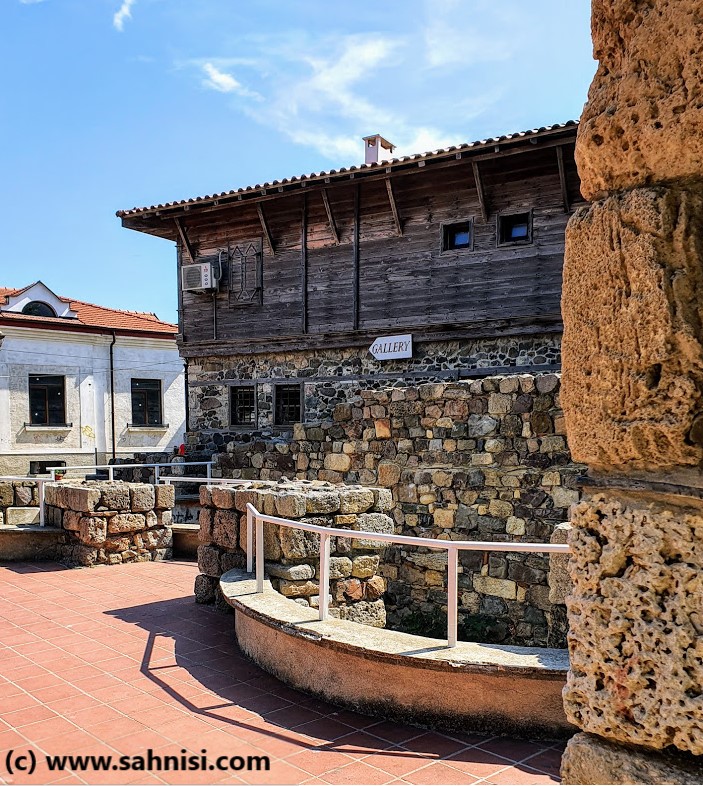
As shown in the first (valid) approach, some of the landlords may have decided to reconstruct the old house following the same principles, but with modern materials. The result is not eye hurting and fits well with the environment, showing respect vis-a-vis the heritage. However, it shows little imagination, rather ”playing it safe”.
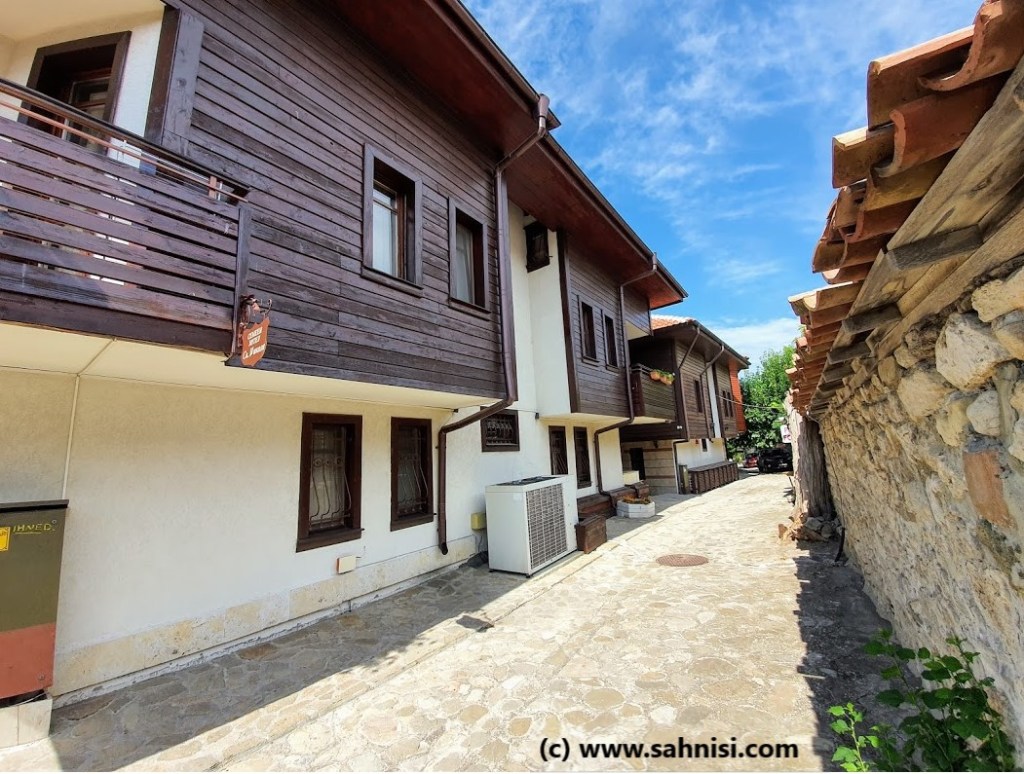
Let’s look at the second approach. The innovative and creative architect takes a chance in creating new work and blending it with the old architecture, while not spoiling it. In the old towns of Nessebar and Sozopol, there a few such distinctive examples.
Let’s start with the first, the Museum of Archaeology of Nessebar. I am not going to dive into the details of what is stored inside the museum and whether it is worth a visit or not. Rather we will focus on the building. Having said that, there is a big exhibition of relics from the old Thracian, Greek, Roman, Bulgarian times (yes, Nessebar had a complicated, yet interesting history!) that the avid historian may choose to see. The building dates from 1994, authored by Hristo Koev, one of the architects that also had a major contribution, as a young apprentice of Kolyo Nikolov, to the urbanistic creation of Sunset Beach. The building ressembles the complex rectangular structure of the typical Nessebar cramped street blocks. The museum is placed exactly at the entrance in the old town. The height is humble and leaving space for the eye to capture the greatness of the city, including the defense walls and the traditional houses. The material used for the facade is marble, matching in color the thick fortress walls. The roof tiles are similar to the ones used in the typical old house in Nessebar. The museum has a yard in front, which sets back the building itself, thus allowing the eye to capture the entire horizontal structure. Lastly, the building is multi-levelled, thus again following the hilly terrain of the inner city.
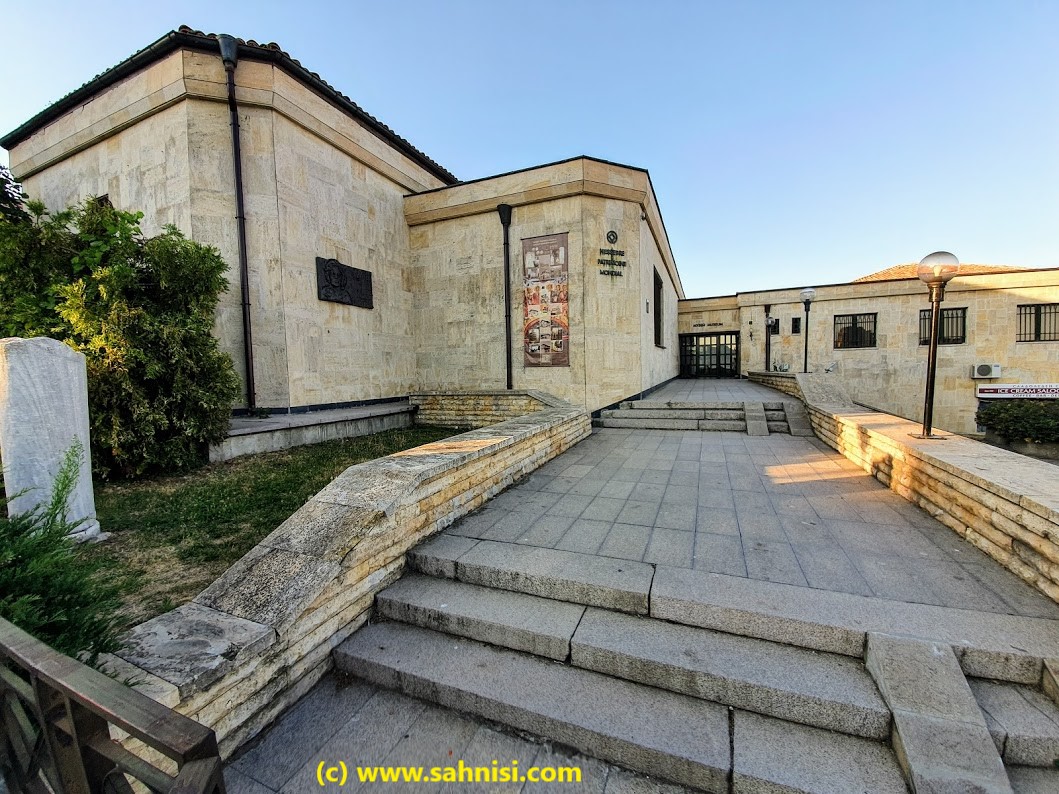
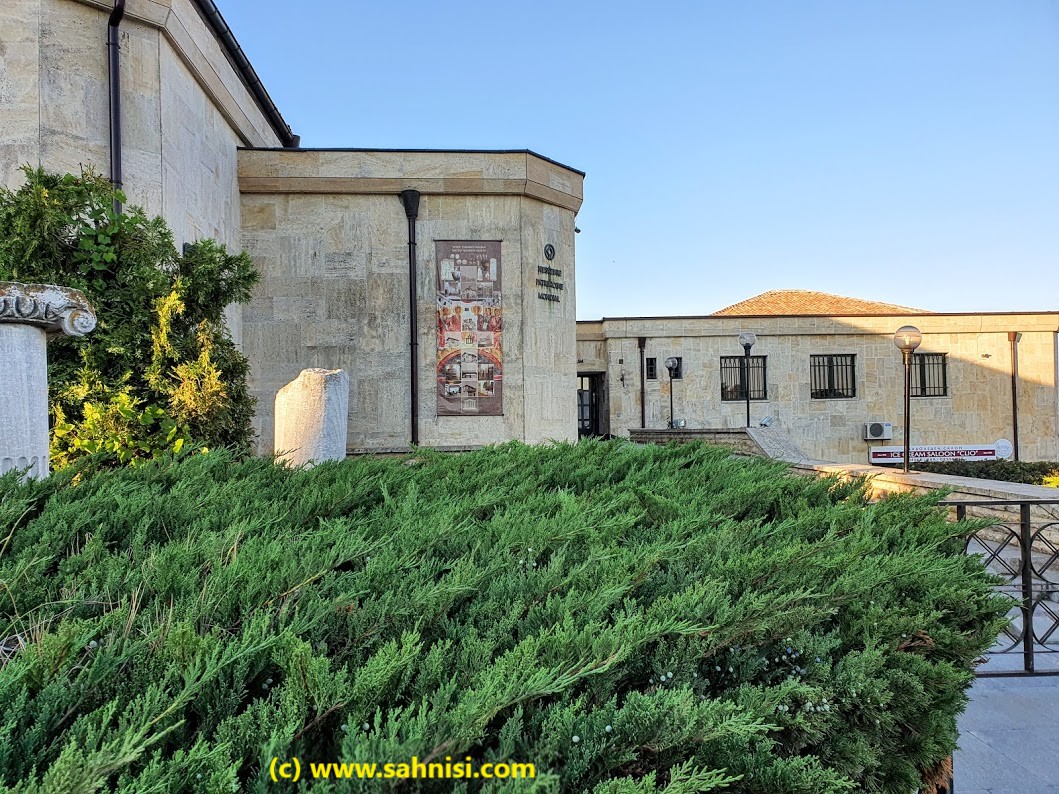
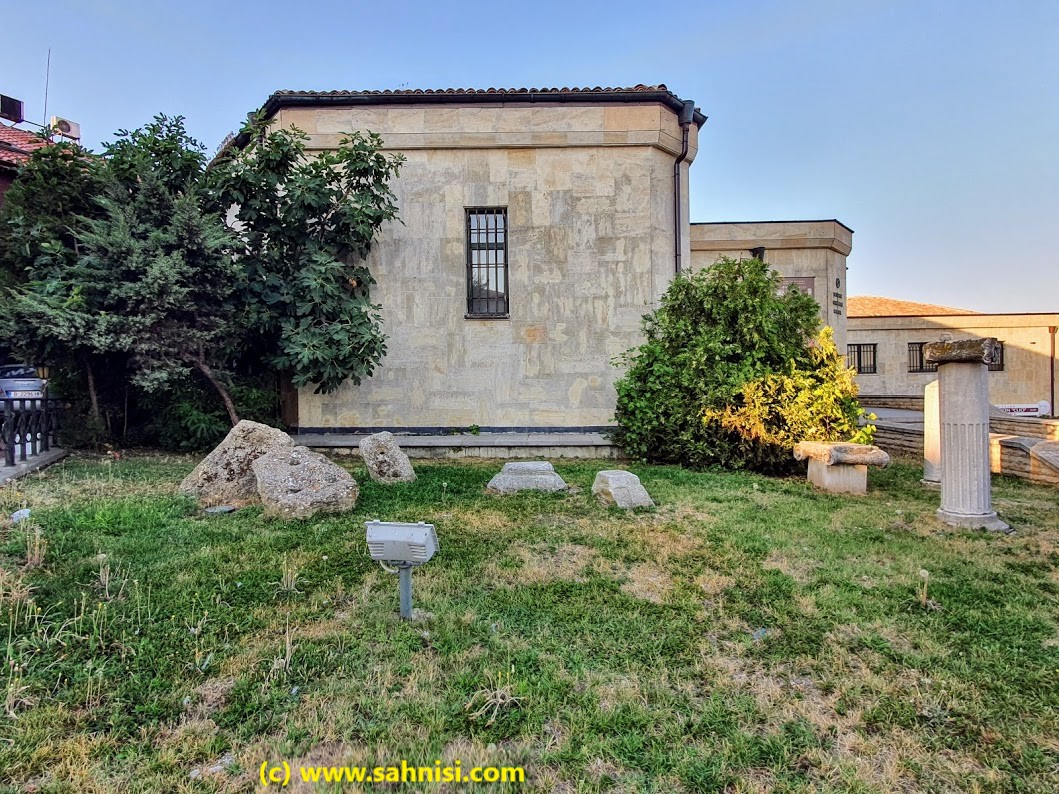
Nessebar Museum of Archaeology. 1994, architect Hristo Koev
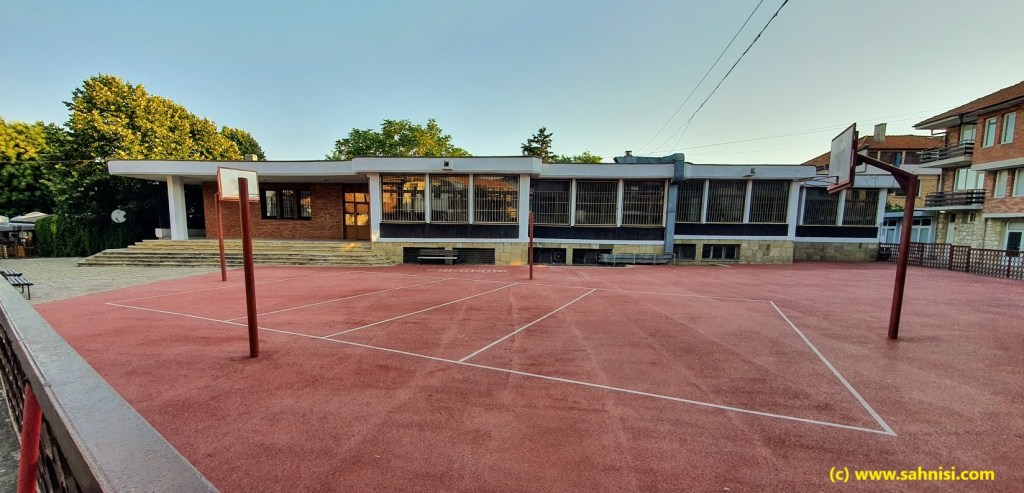
200 meters away into the city, there is a building drawing little attention at a first glance, however, it blends nicely with the streets. It hosts the local College of Nessebar. Again, it strikes with humbleness, not blocking the view of the visitor from the nice houses. Again, the structure is rectangular and modular, with the modules gradually protruted from the main facade, just like the structure of the houses on the main streets. Each module has three horizontal registers: the stone, which is the same as in the case of the traditional house, the wood, not having an exact functional role here, apart from the correspondence with the house and the large openings of the classrooms. This last component differentiates itself from the typical house which normally has narrow openings, but at the same time it responds to the functional need of the building. Not less interesting is the entrance portal, on the corner of the structure, with a brick facade and a polygonal pillar, which calls out to the typical terrace of an old house.
A bit less subtle but still effective is the building near the Church of St. Stefan, which hosts commercial centers, a Movie Museum and is called Kastro of Mesemvria. The building does little in showing humbleness vis-a-vis the 10th century church and it stands out, but does not disturb the eye (too much).
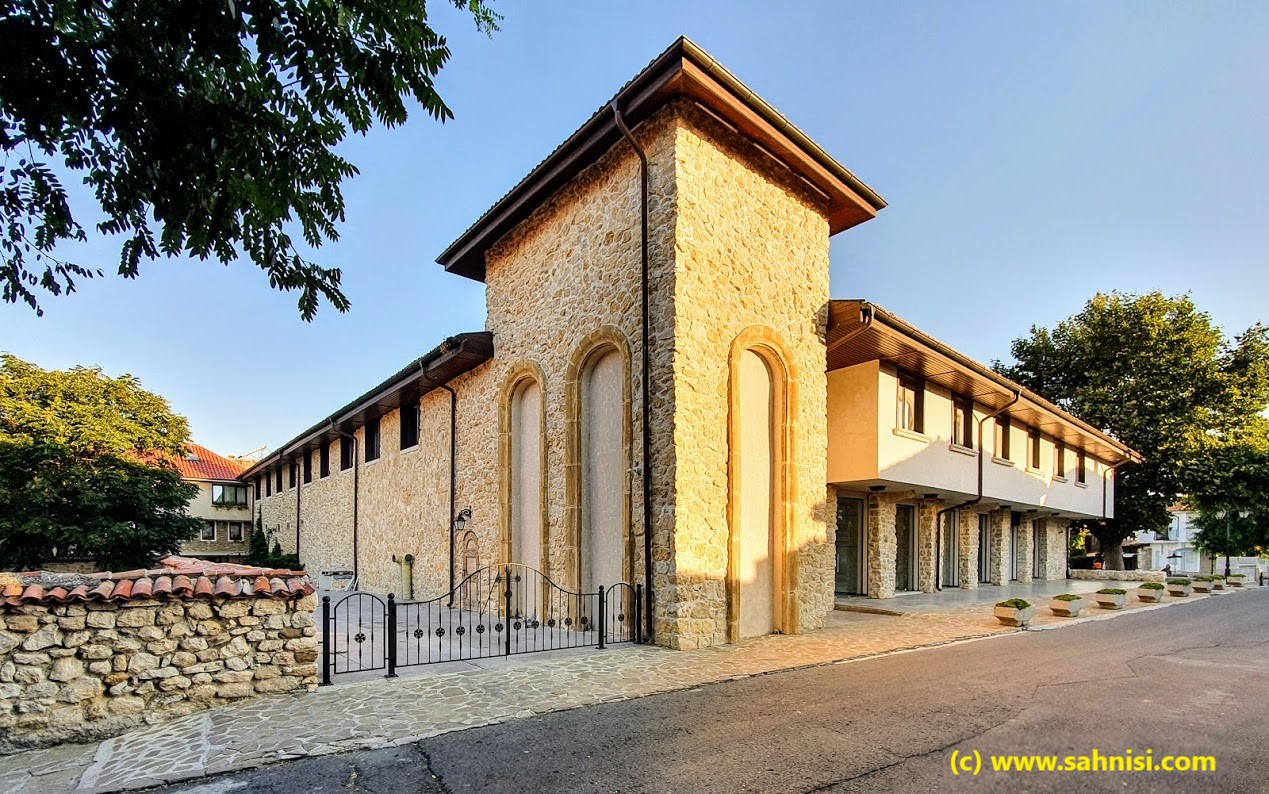
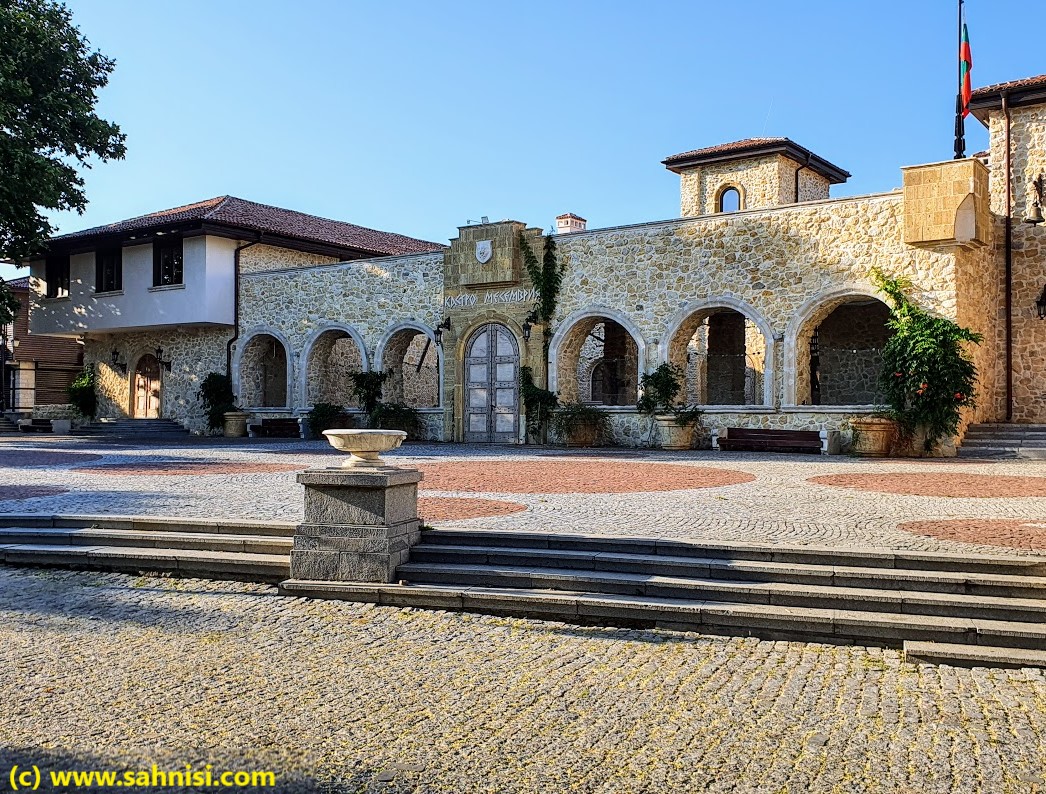
Kastro of Mesemvria (the South-East wing and the Northern wing)
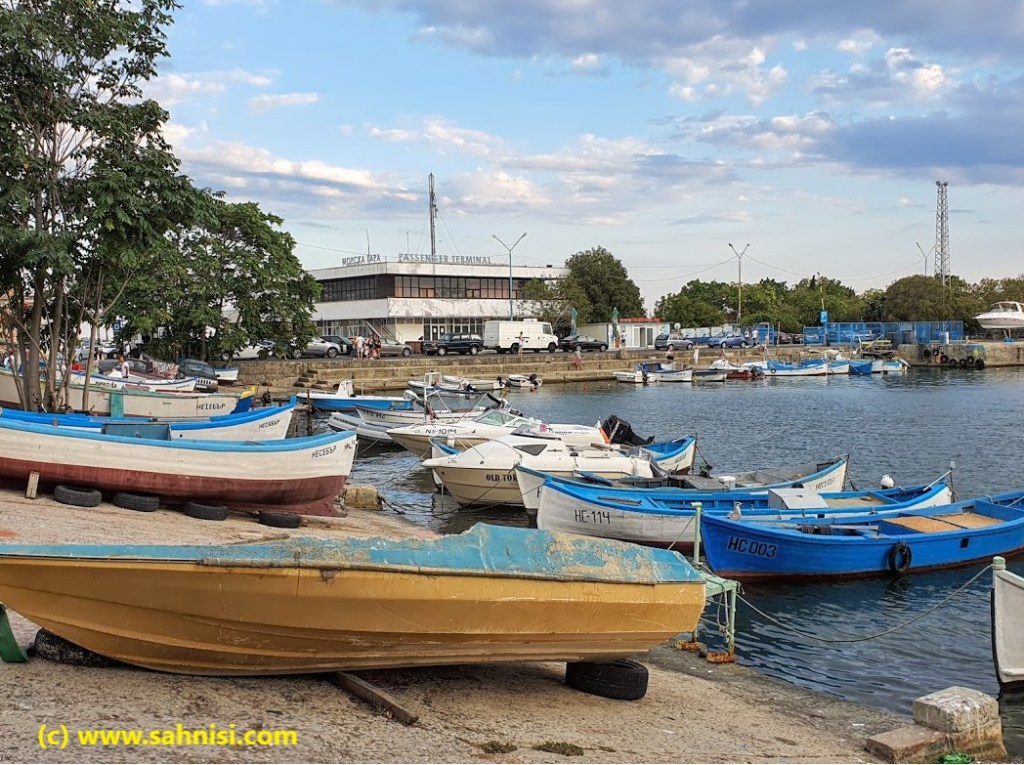
One more example of ”neither good nor bad” is the port in the old town. It relays the idea of horizontal dimension, blessing the sea line. The bad shape of the building rather makes in unattractive, though the potential is there.
We are closing in on the nicest forms. One of the oldest traditional house in Nessebar is the House of Captain Pavel. But this is subject to a different paper. What I like most is the Town Hall Building near Captain Pavel’s House. It is clearly built later, probably in the 20th century in a questionable eclectic style. However, the plan matches the one of the Pavel’s building and nonetheless, the building is pushed back by a few meters, allowing the viewer to see the old house first. But the facade is symmetrical, composed of three vertical modules, with the outside modules protruding just like the sahnisi’s of the old house. And the bossage of the ground floor matching the stones ground floor of the old house. The City Hall is taller, but by wisely pushing it back, farther from the harbor, the view is not disturbed and the eyes first fall on the historical monument. The newer building simply backs it up.
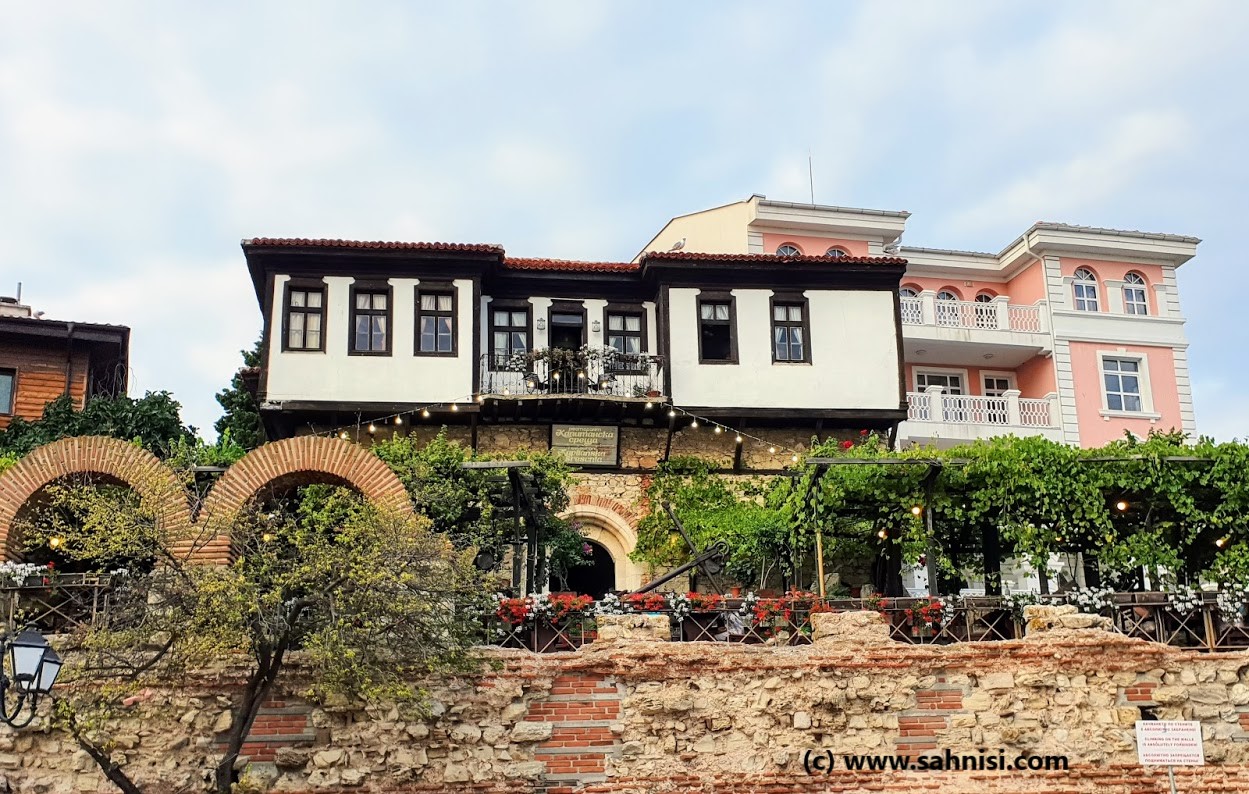
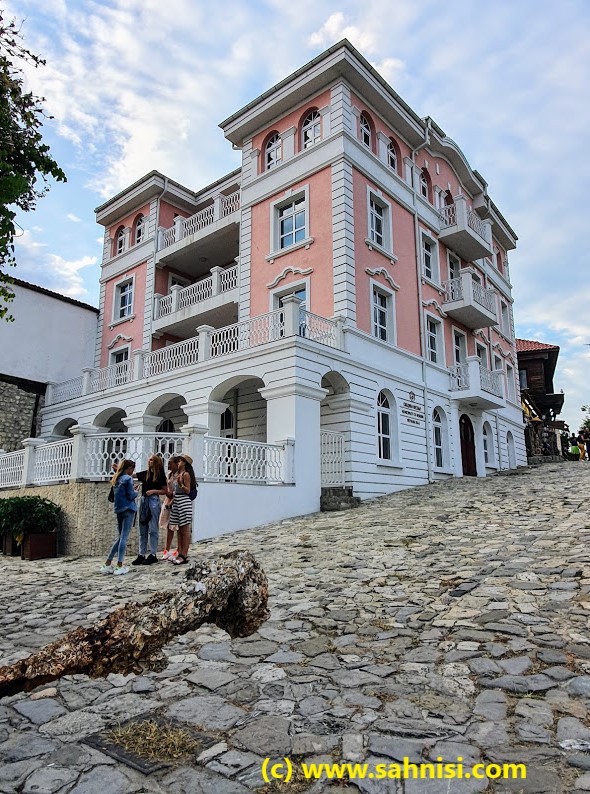
Captain Pavel’s Old House (1850) and the Nessebar Municipality
There are also not-so-inspired cases of modern architecture. In some cases, ”architecture” may be even a big word. There are huge plots of land near Old Nessebar, in the South. During the last years, these plots of land were heavily exploited. The town of Ravda hence grew horrendously with many cheap structures, built with bad taste, with the only goal being the profit margin. To compensate for the low quality, the builder uses saturated colors, with some fancy protrusions, to create a complex, yet uninspired volume. Cheap handrails, plastic frame windows and horrible view altogether. These buildings do not deserve too much analysis, as they do not really follow any architectural principles.
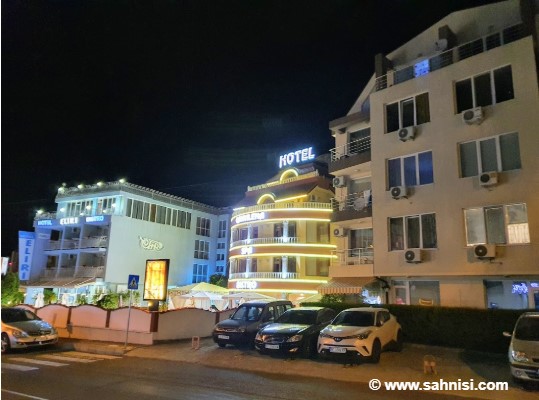
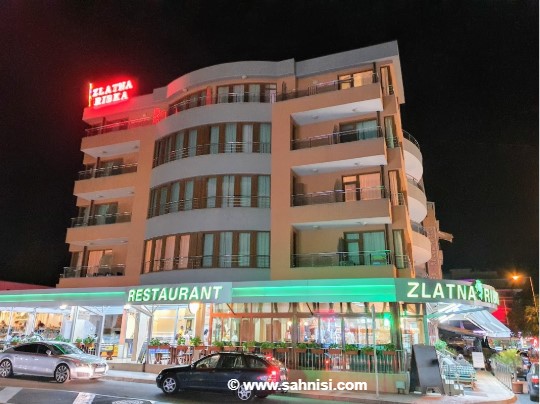
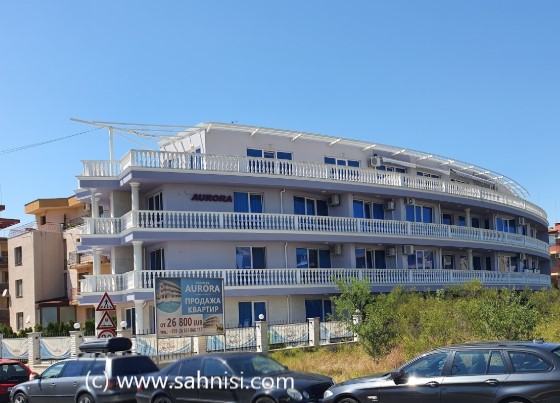
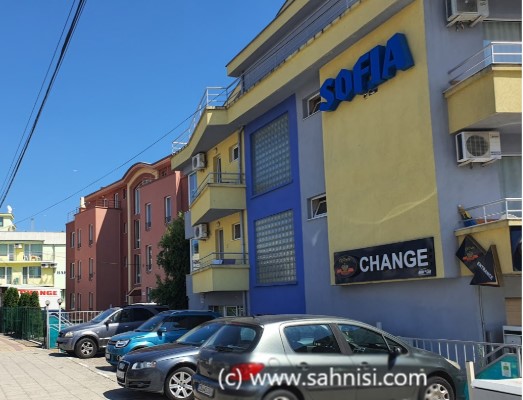
Uninspired architecture in the town of Ravda, South to Nessebar. The last photo shows two pathetic examples of buildings that try to employ traditional motifs. The background building has a curvilinear central structure, as in the Bulgarian revival architecture. The foreground building has sahnisi-like balconies. Both structures are painted in diverse intense colors and are real kitsch examples of heavy real-estate investment in the region.
 sahnisi