The picturesque towns of Nessebar and Sozopol stand proud on the coast of the Black Sea. A stroll in the old parts of this towns will reveal as much architectural history as one can stand. These ancient cities had a tumultuous history, starting from Thrace settlements, then Greek colonies that fell under the conquest of quite a few empires, in order… the Roman Empire, the Byantine Empire interchangeably with the First and the Second Bulgarian Empires. Then, from the 15th century, it fell under the rule of the Ottoman Empire and an economic decline followed. Up until end of the 18th century when the Bulgarian Revival period began and turned the tide, generating a strong economic comeback which, up until end of the 19th century, manifested through a magnificent architecture in the main towns of Bulgaria. In those days, the core of the country was in Veliko Târnovo, where architecure bloomed in form of churches, military or residential buildings. The key role was played by a common team of talented builders originating from the small town of Triavna, near Târnovo. A lot of Bulgarian Revival houses from the Târnovo area (Triavna, Kotel, Arbanassi, Bogentzi, Elena, Drianovo, Kotel) are the work of these builders. They went as far as the Black Sea coast and many of the old 19c houses in Nessebar and Sozopol follow the patterns of the Triavna ”school”, though adapted to local conditions [1].
There will be a separate dedicated post on the archetype of the Bulgarian house of Triavna School and how this influences other typologies in Bulgaria, but for now let’s follow the quiet1 walk in these towns. For centuries, just like other towns placed on the sea coasts in the Mediterranean or Black Seas, the streets in Nessebar and Sozopol did not follow an ordered rectangular grid, but they were narrow and winding. There are two reasons for that, mainly caused by the extreme weather conditions: scorching sun in the summer and strong winds in the winter. A rectangular street grid would allow the wind to freely circulate and would cause serious drifts on the streets. Walking or sitting outside in cold winter days would thus be not easily possible. On the other hand, the streets are narrow with respect to the height of the buildings, not allowing the sun rays to directly fall on the ground or on the balconies, where the sitting areas in the summer days would be. The streets are occasionally hilly and a draining sewer is created on the central axis to collect the rain water from the rain pipes.
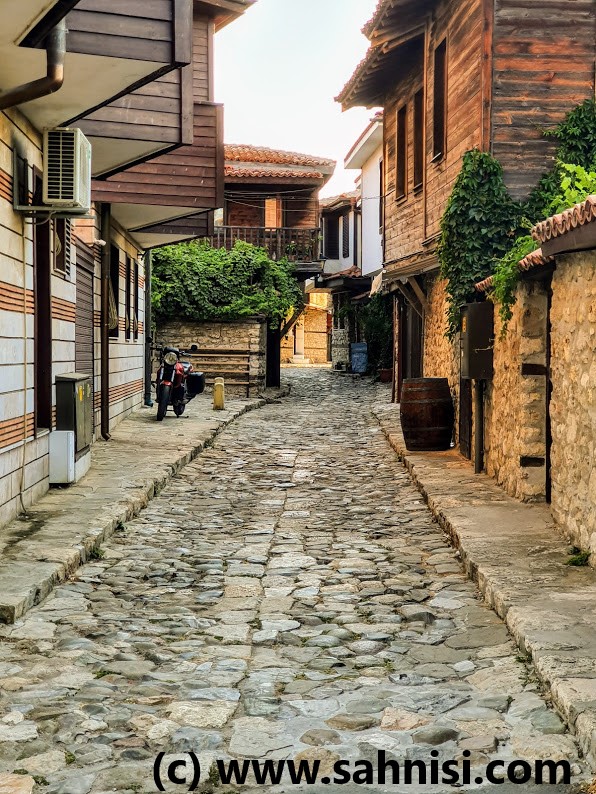
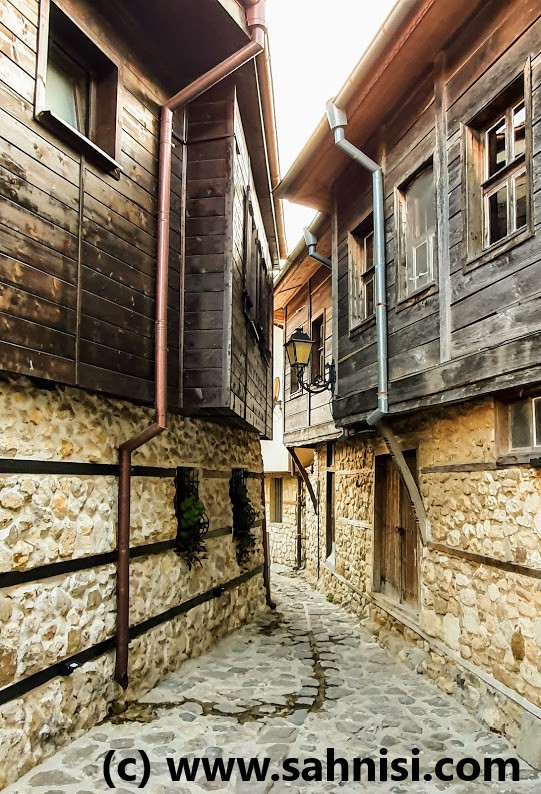
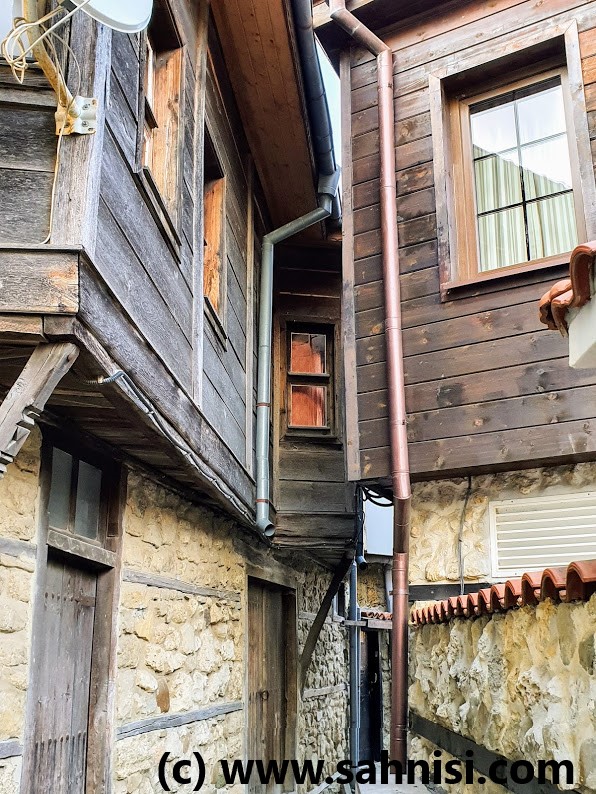
”Urban planning” in Nessebar. Streets are narrow and winding to prevent the wind or the sun from affecting the walking or the outside sitting. Triangular sahnisi’s are intricated and block the direct sunlight.
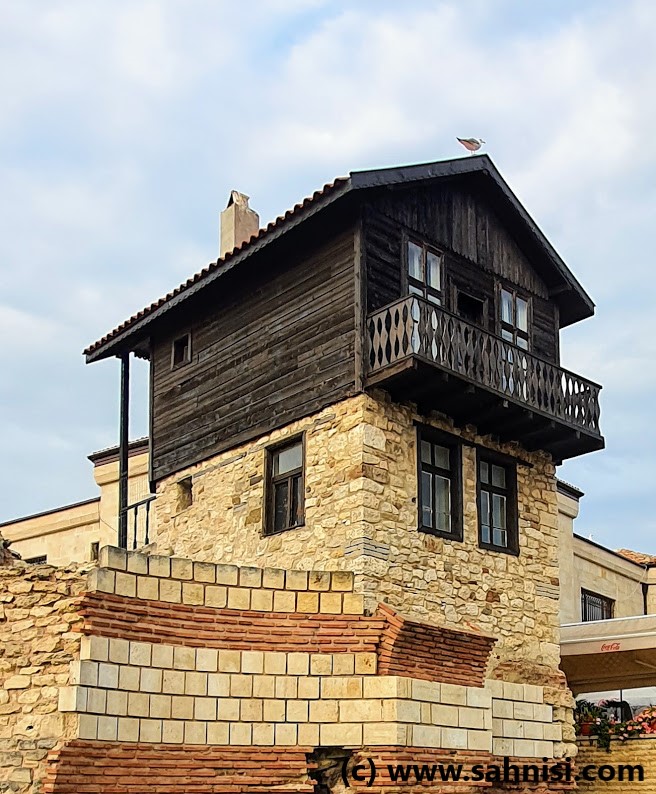
The typical house has two or three floors. The ground floor has thick stone walls to avoid humidity and maintain a constant temperature even in the summer days. It is used as a cellar or storage area. It has interior staircase leading to the first floor where the living area is. Here one can find the kachta, where the living room is, and the dormitories.
Also seen in the house plan is the frequent use of sahnisi. There are various types of sahnisi, with some of them being triangular, while other rectangular. The triangular sahnisi has two purposes. As it can be seen clearly in the pictures, triangular sahnisi’s can get better intricated and cover the street, which would be more difficult to achieve with rectangular sahnisi’s. There is another generic reason why triangular sahnisi’s are employed. Because of the street plan, the footprint of each house is irregular. Normally the ground floor does follow the shape of the plot and also has an irregular shape. However, for practical reasons, the plan of the first floor has to be recangular to allow for a regular division of the space in rooms. This regular (typically rectangular) plan of the first floor is created by allowing this to protrude into the ground floor and create the sahnisi.
Examples of a rectangular sahnisi can be spotted in the next examples.
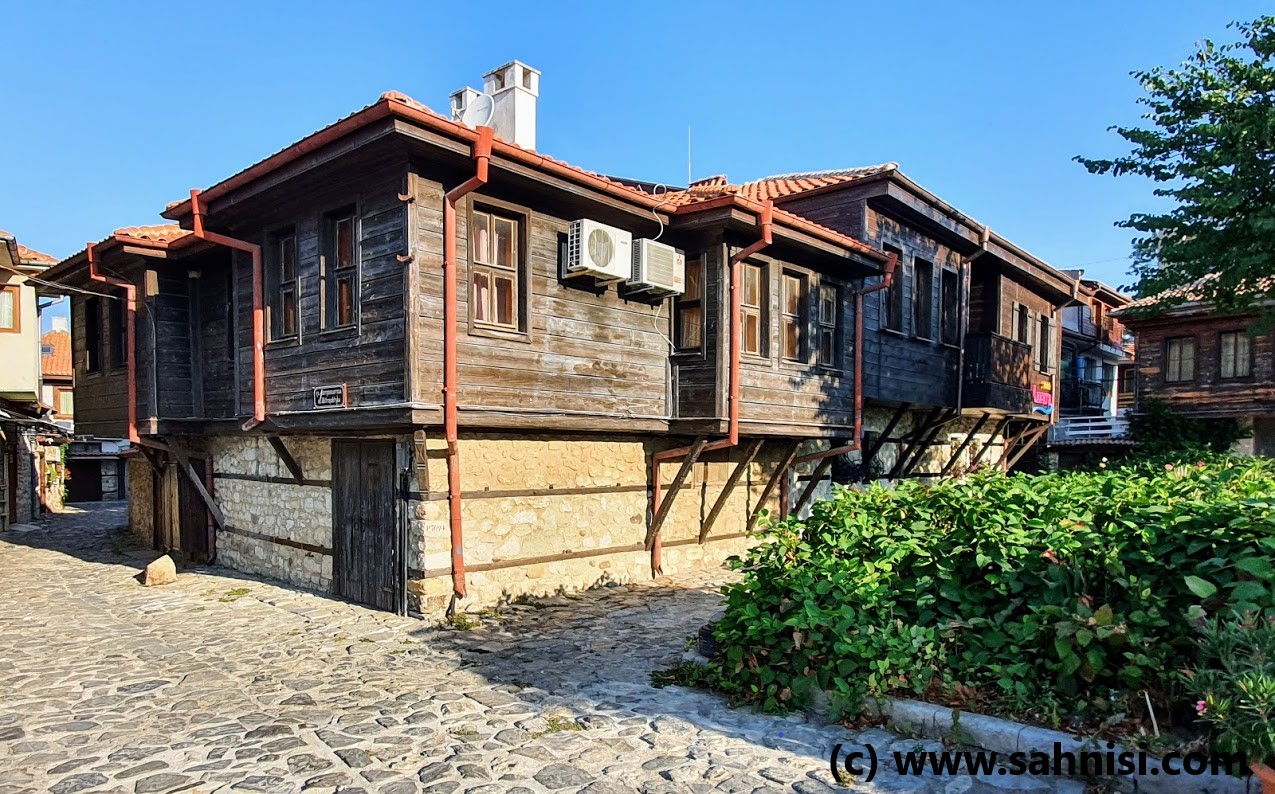
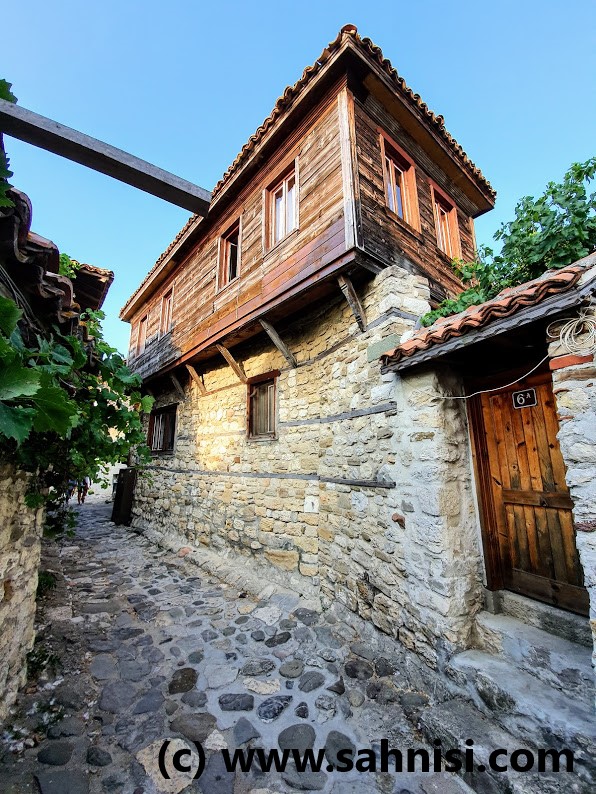
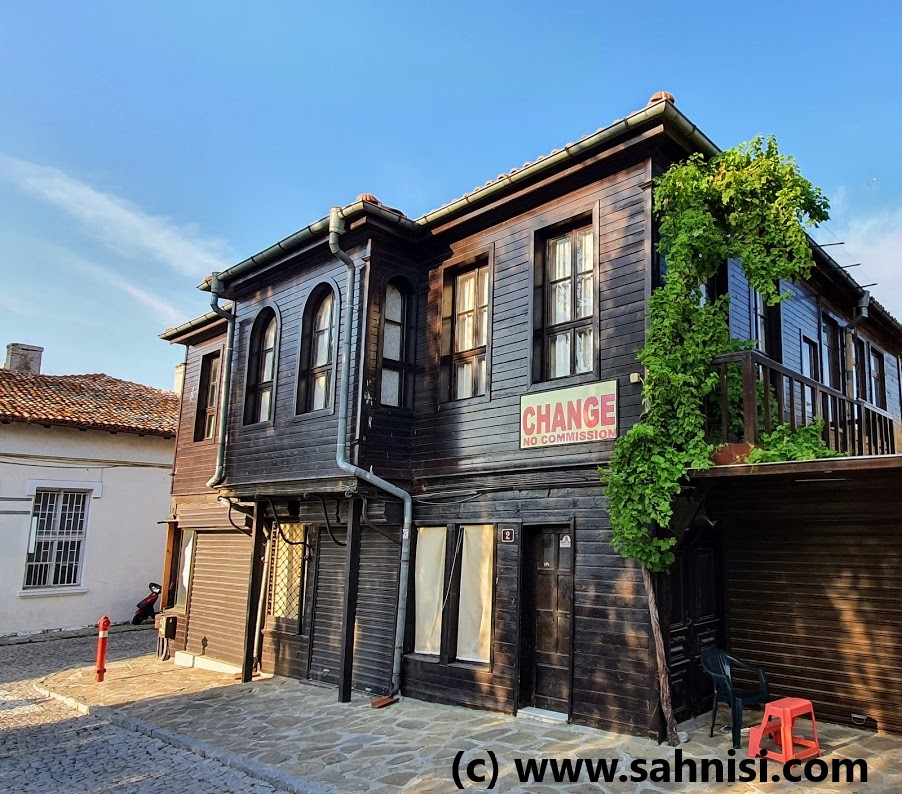
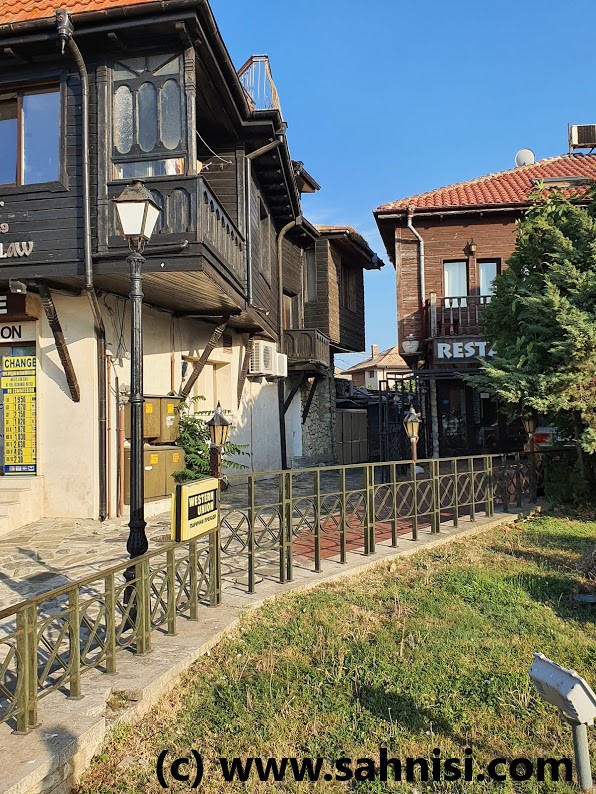
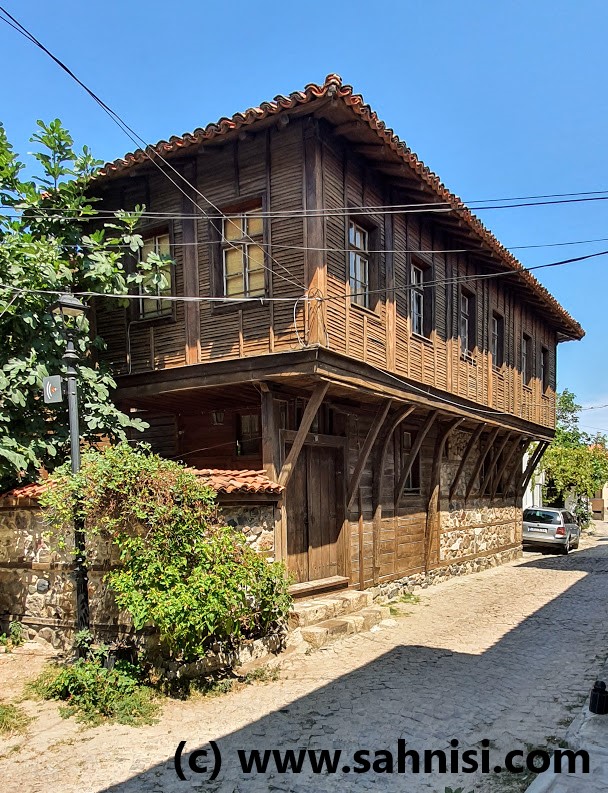
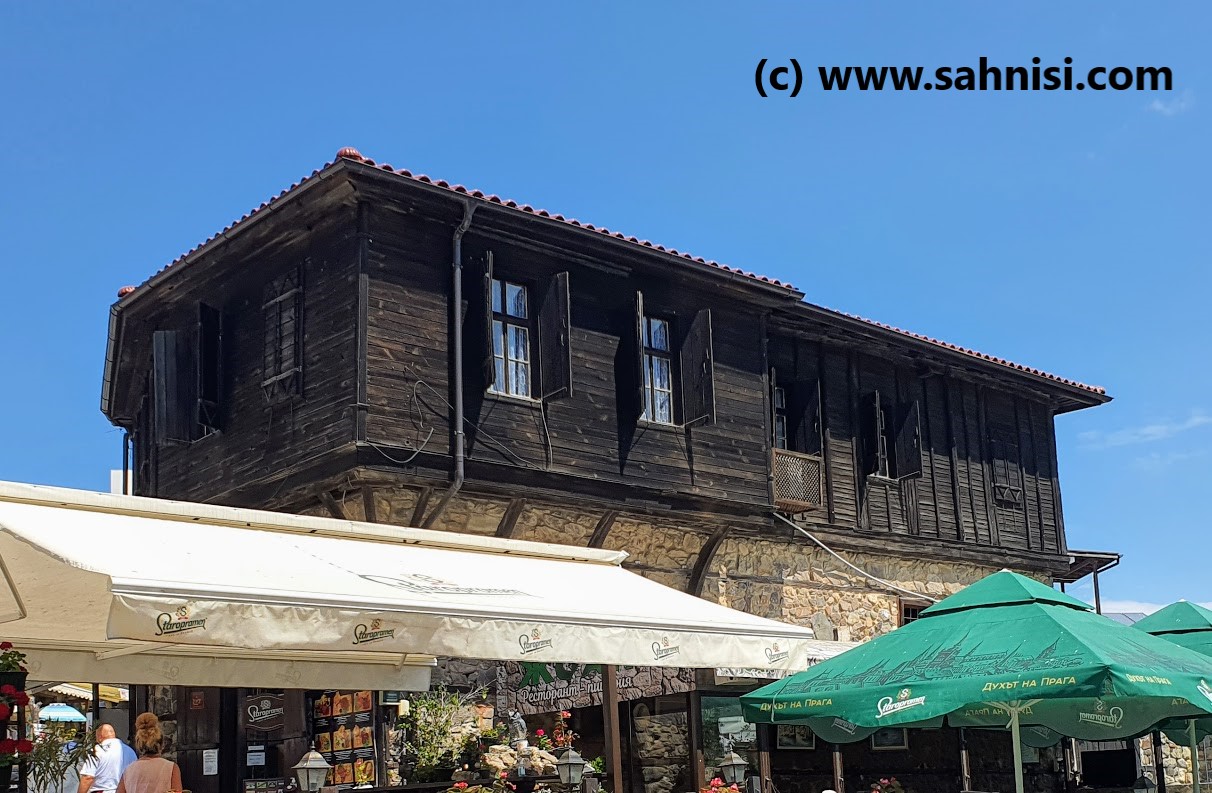
Examples of a rectangular sahnisi, in which the protruding first floor creates additional living space. Ground floor’s masonry is irregular, while the first floor is always covered in wooden planks. Occasionally, when used for living, the ground floor is also covered in wood. Top row: Houses in Nessebar. Bottom row: 1, 2 – Houses in Nessebar, 3, 4 – Houses in Sozopol
In the center of the typical Balkan house with sahnisi there is the living room, also hosting the staircase, surrounded by rooms, as explained. Therefore, in the old plans, the two lateral rooms, facing the street, features such sahnisi’s, creating from outside a very interesting symmetrical view. This is exemplified below. Sometimes, especially for larger houses, there is a hagiati/hayat, which is an open balcony connecting the two symmetrical sahnisi’s. Usually, out of the two rooms with sahnisi, one is the main bedroom while the other is a tea or piano room where the family gathers during wintertime, when the outdoor hagiati would not be usable.
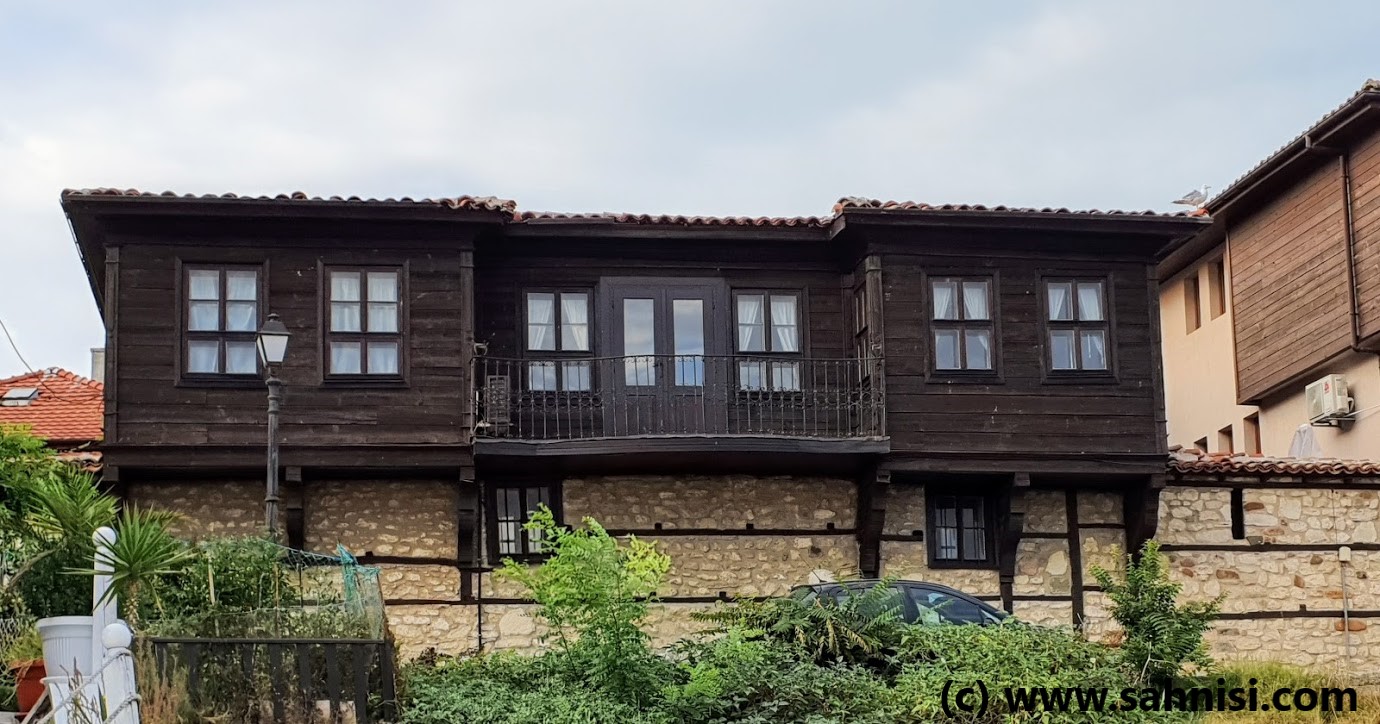
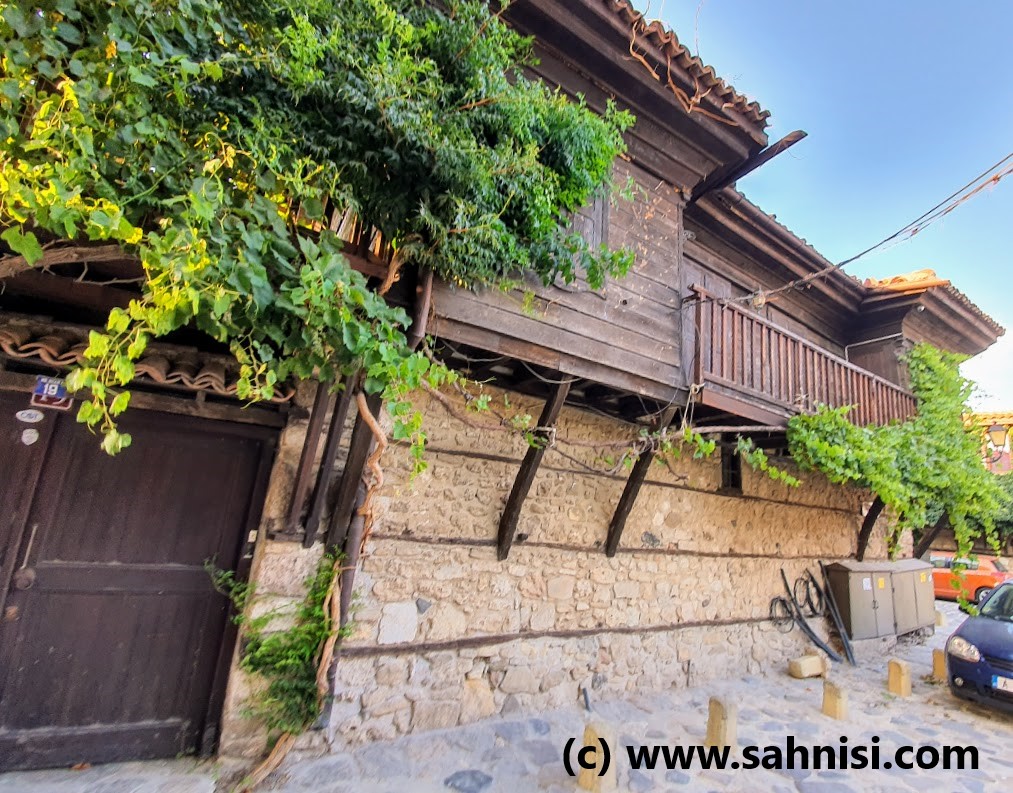
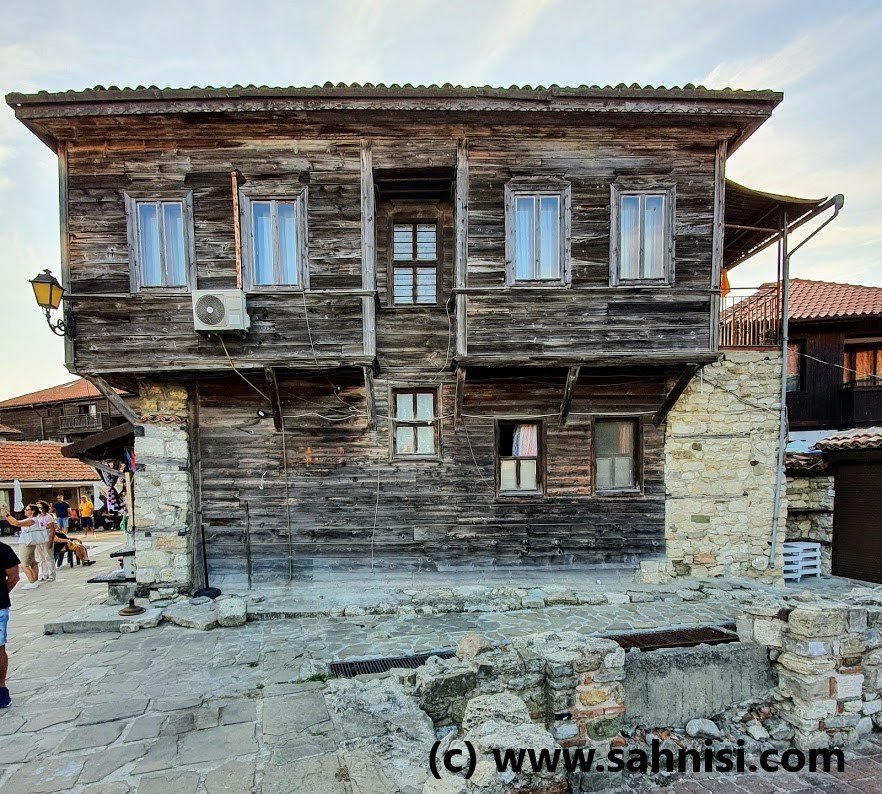
For greater footprints of land with rectangular plot, one would employ rectangular sahnisi’s, symmetrical by each side of the living room. The sahnisi’s extend the bedrooms placed around the living room. Top left – A Nessebar house (#BLK3) facing the sea, which, judging by position and size, used to belong to a wealthy family. The house features a hagiati connecting the two sahnisi’s. Right – A central house (#BLK4) in the Sq. of the Agia Sofia basilica in Nessebar. In front of it, the ruins of the small church of Saint Demetrius. This might have been faimily’s private chapel. Bottom left – A beautiful house with a very wide hagiati where the family would gather in the summer to do some people-watching on the street
There are two very picturesque and outstanding examples of the oldest houses in Nessebar. We will start with the Captain’s House (#BLK2), an 1850 edifice, right across the street from the amphitheater, facing the sea to the South, where the old port is placed, thus allowing the captain to have a view of the entire gulf.
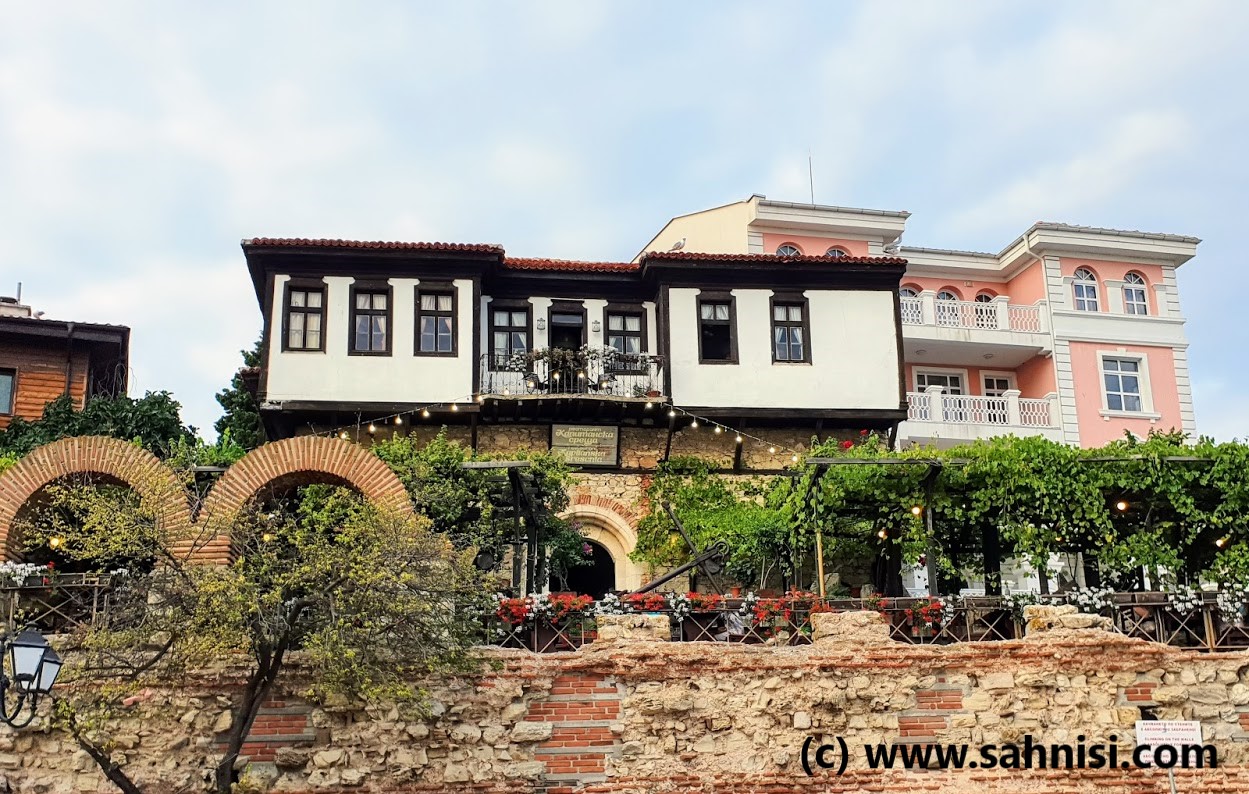
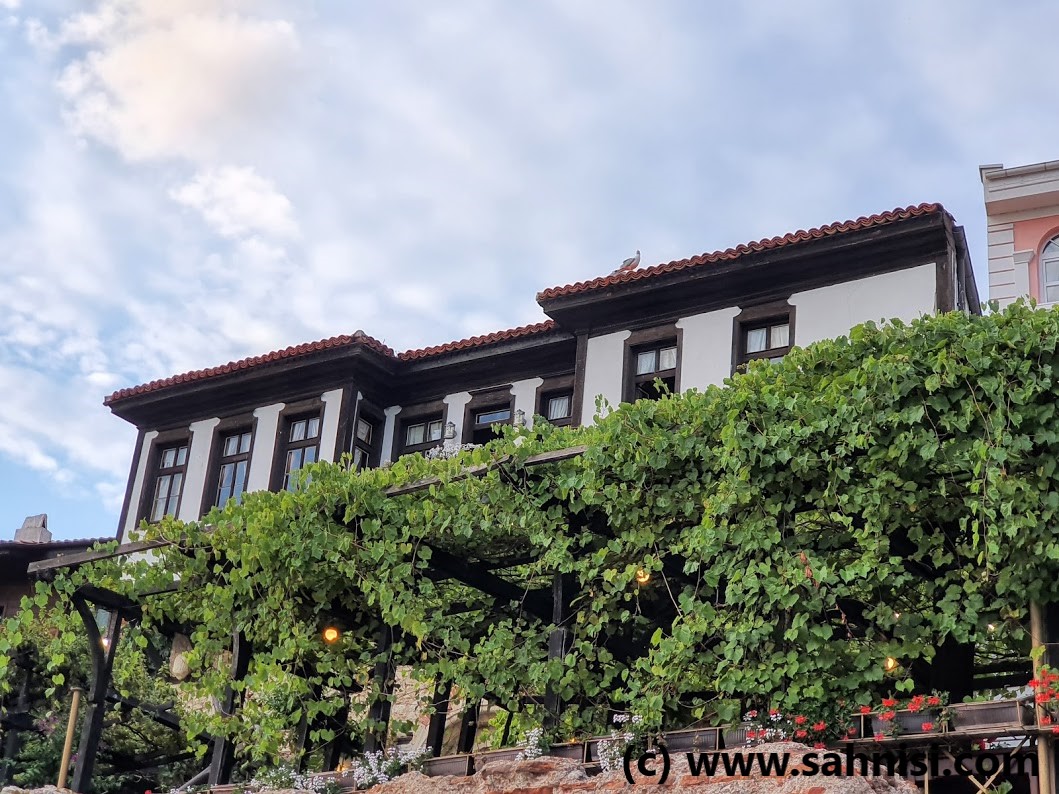

Captain’s house from different angles is a textbook example of an old Bulgarian Revival House in the area.
The structure is symmetrical with two rooms featuring sahnisi’s on each side of a living room with hagiati. The east-side room (to the right of the center) is slightly bigger, we can assume that this acted as a bedroom, also given the reduced number of openings (2 vs. 3), while the left one might have been used for the family during wintertime. The ground floor is quite tall, raising the living area to a level where perfect visibility is thus created towards the harbor. We can also assume that this family was very wealthy, judging by the commercial role of the port captain and by the large storage on the ground floor. The windows on the first floor have typical wooden frames, with a 3 x 2 square matrix and with an elegant ”crown” on top of each window.
The second building worth exploring is the 1840 built House of Panagioti (#BLK1) Mouskougianni (today the Ethnographical Museum), again a splendid example of a typical house built for a wealthy Greek in Nessebar. Unfortunately, there are no indoor photos from this house. As of summer of 2020, the museum is closed to the public.
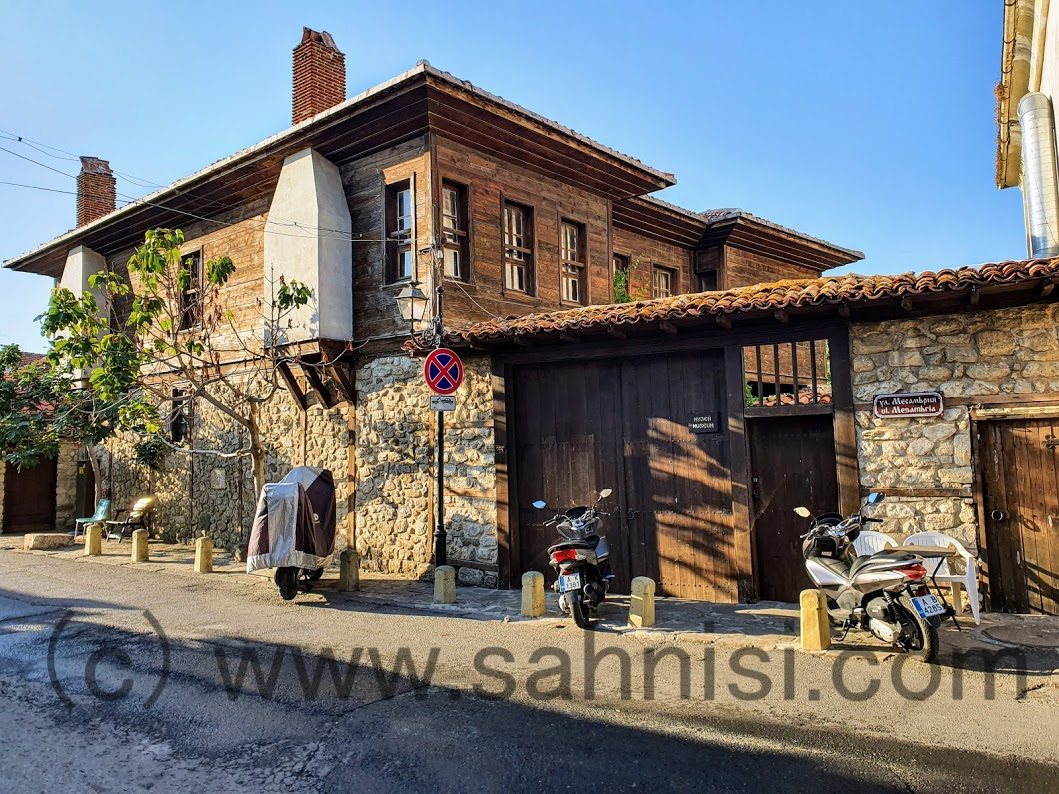
House of Panagioti Mouskogianni (Ethnographical Museum of Nessebar). Two fireplaces are clearly seen with the role of evicting the smoke from the soba’s used for the heating the main rooms. The great number of soba’s is again a sign of the wealth of the proprietor.
The house also has a large footprint. Unlike the other previous examples, the house has a big internal yard, which is not very common for the houses of Nessebar, where little extra space exists around the buildings. The symmetrical main facade of this house faces the yard, not the street.

The storage room is separate masonry module from the house and can be found in the main yard. While the facade on the main street has the ground floor covered in stone with wooden beams, the house itself is covered in wood beams entirely. The ground floor was used for kitchen. The staircase leads to the upper rooms with ceilings which are beautifully carved in wood, typical to the Ottoman period.
To come back to the other old houses in the region, less frequent are the polygonal sahnisi’s, normally used for corners.
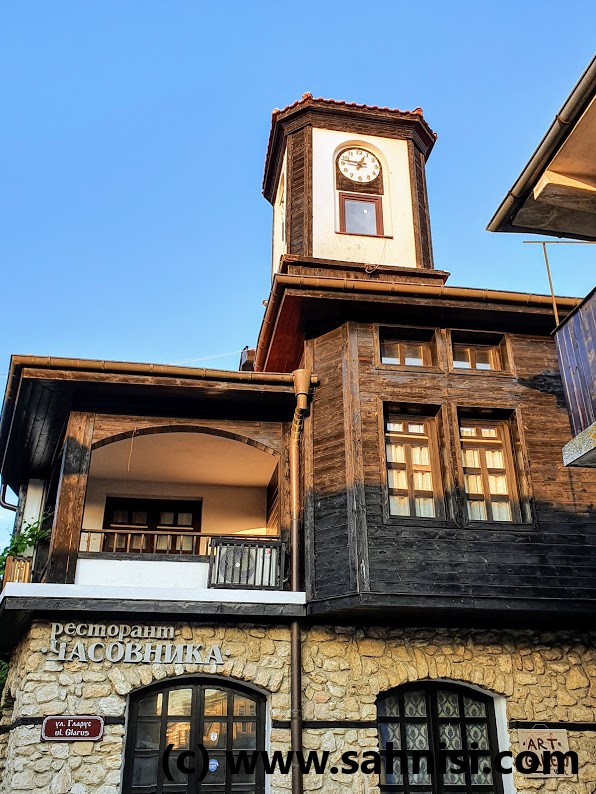
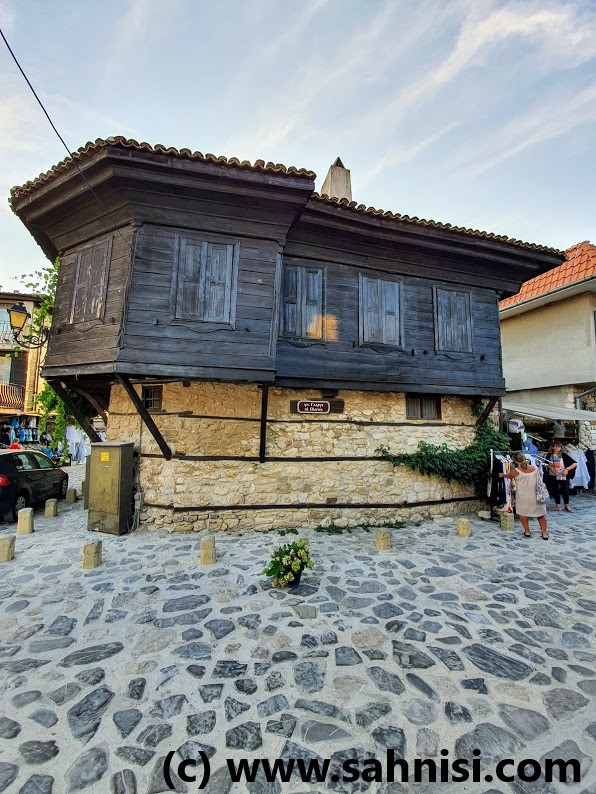
Polygonal sahnisi’s. Left – a house with both a hagiati and a polygonal sahnisi which mimics the shape of the clock tower, thus creating a harmony of dimensions and shapes. Right – the polygonal sahnisi elegantly ”resolves” the corner of the square.
If one pays close attention, will see that the houses in Sozopol tend to preserve better their original appearance than Nessebar. The wooden planks used to cover the facade are not very thick, just like it was the case before. This makes sense, because these were always meant to be temporary and thus cheap. On a couple of years basis, they would be replaced, after they had been affected by sun, humidity and salt in the air and in the water vapors. Lacquering (on an yearly basis) is used today as a modern way to protect the wood and this allows for a better preservation. The modern landlord can thus afford to have thicker, wider beams that definitely look nicer and don’t need to be replaced. As opposed to that, the old houses were more austere. Where as in Nessebar, the wooden planks used to cover the house are thick and lacquered, adapted to modern life, in Sozopol, this old appearance comes more natural.
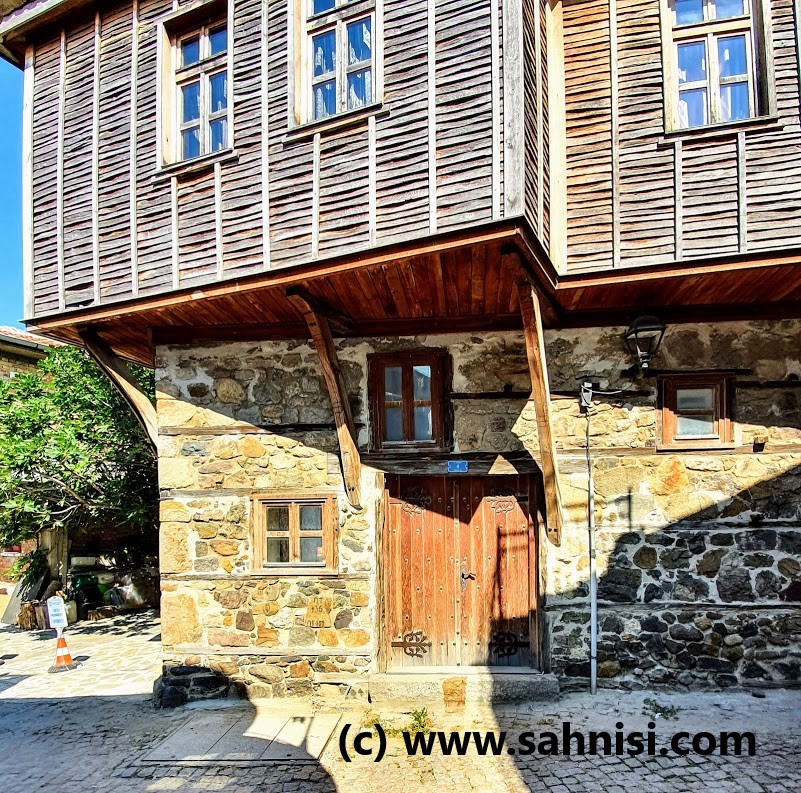
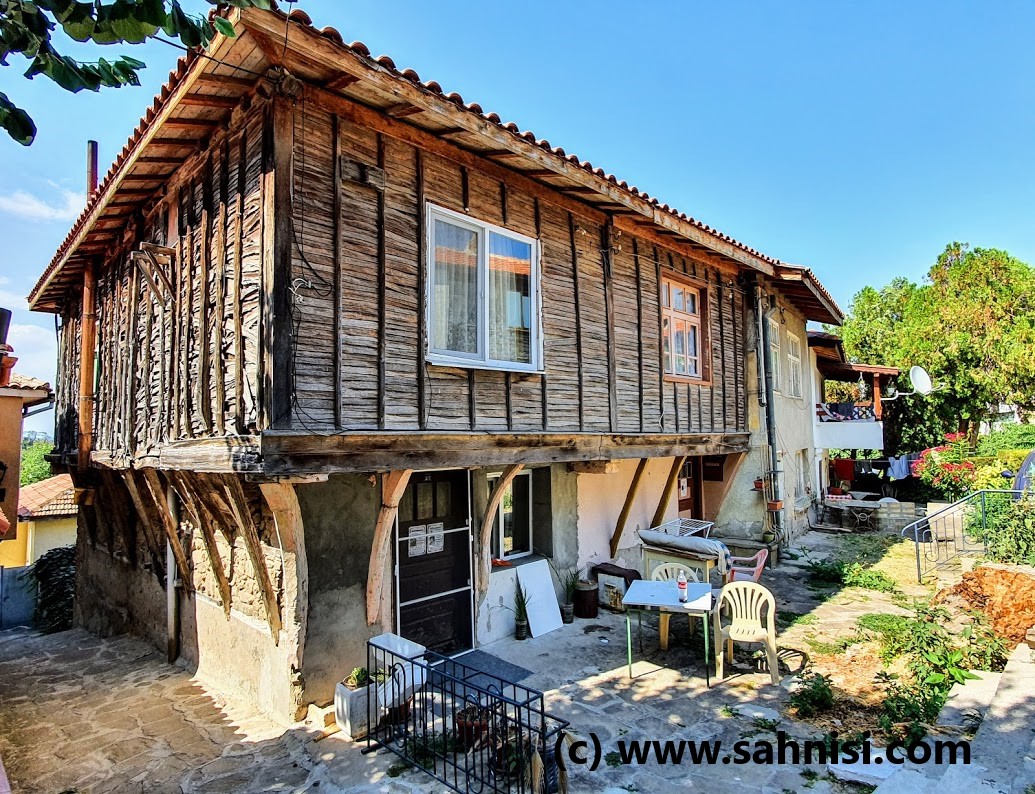
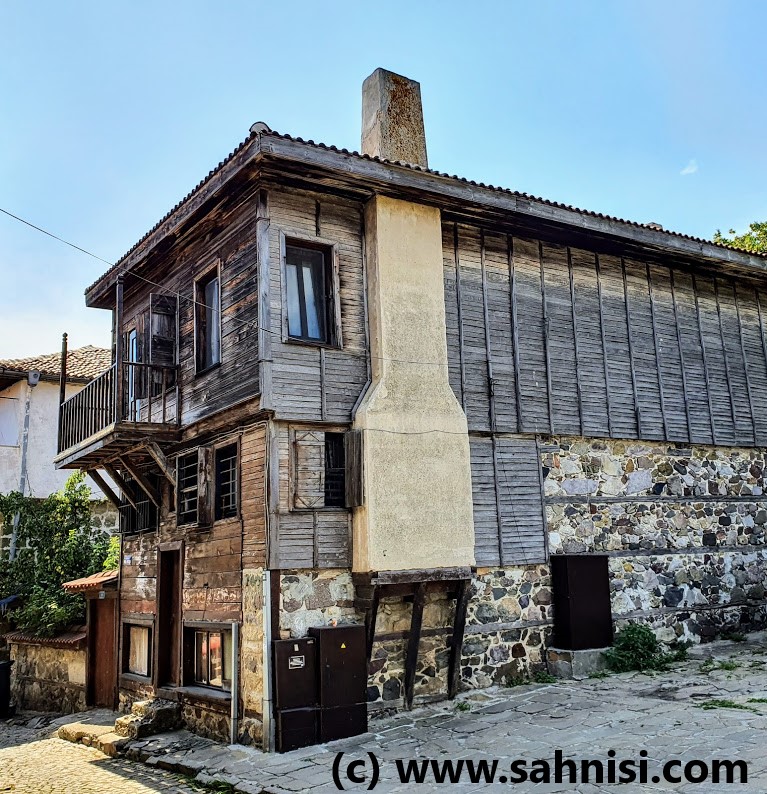
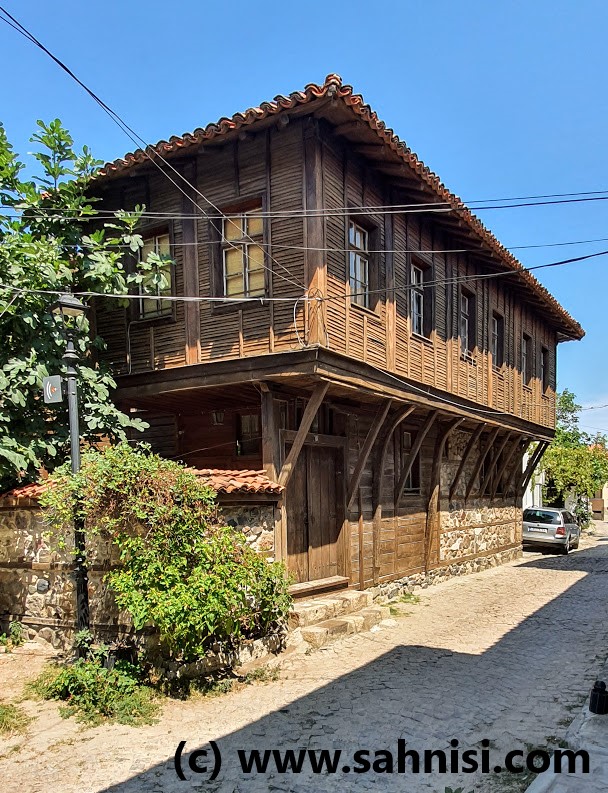
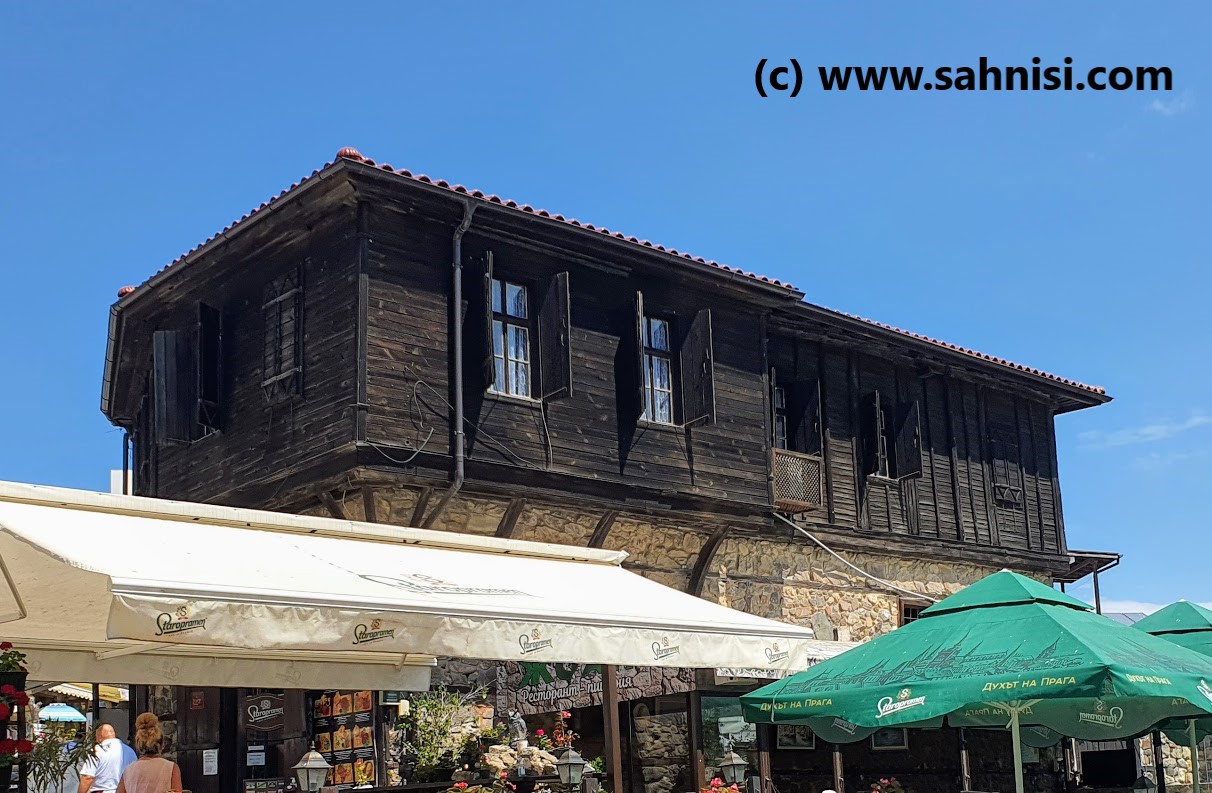
Houses in Sozopol exhibit thin beams covering the facade. These are easy to replace once affected by weather conditions. Middle-right: an interesting example of a hearth, probably used to evict the air from the kitchen placed on the ground floor.
Besides the traditional houses, Nessebar is renowned for the (once numerous) windmills that turned the strong winds of the region into energy required for milling. The best way to exemplify a Bulgarian National Revival windmill from sometimes between 18th century and 19th century is to take a look at one of the last preserved such mill, right on the isthmus connecting the old Nessebar from the new town. On this point, the windmill would be at the confluence of strong winds on the Black Sea Coast.
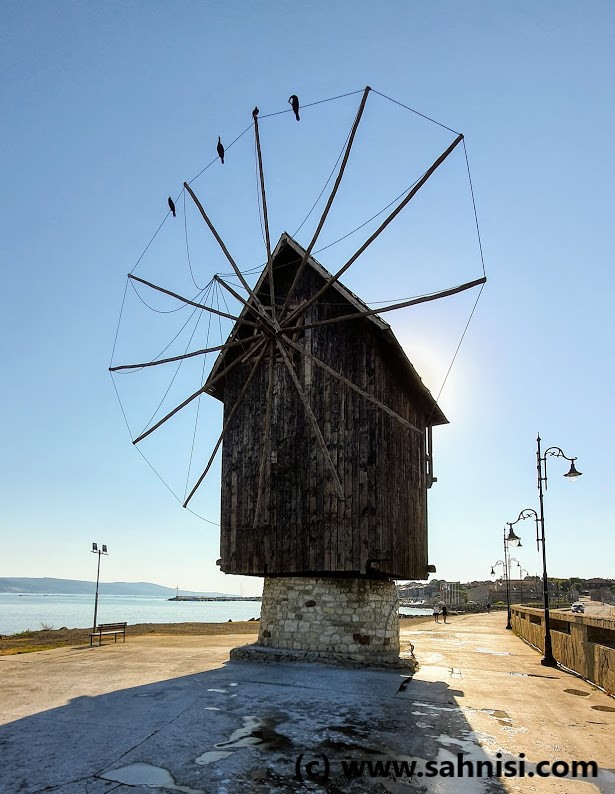
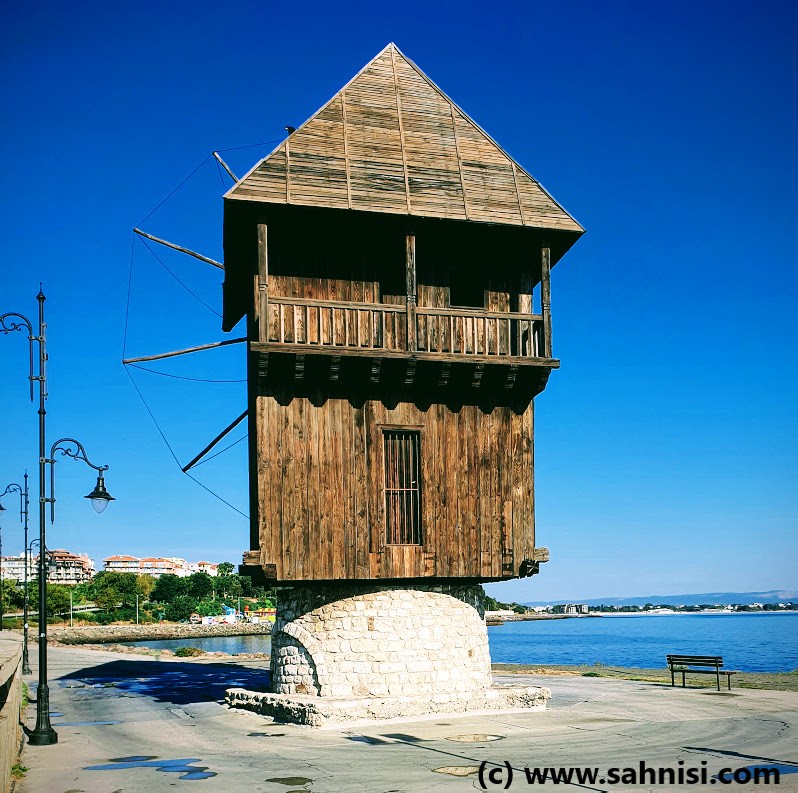
The windmill (#BLK7) on the isthmus between Old and New Nessebar. Left – west-side of the mill with the wings of the windmill, without the sails that would produce considerable force into the milling room. Right – east-side of the mill showing the storage ground floor, the milling room on the first floor and the living space on the upper floor, with a hagiati.
From a plan perspective, the windmill is organized in three floors. The ground floor is the storage room, as always, covered in masonry to isolate the grains from humidity or extreme temperatures. The first floor is the per-se milling room, connected to the wings. The upper floor is used for living. It even features a hagiati, aka open sitting space oriented to the east-side. The last two floors, including the roof, are covered in wooden beams, following the same principles of construction as the other traditional houses.
Another windmill can be found at the old city entrance. Now, the windmill has turned into a house and lost its former function.
Notes
- ”Quiet” is a manner of speech. Both these towns are packed with tourists in the summer days. To avoid the crowd, early mornings in the summer or colder seasons should be targeted for a visit.
Bibliography
[1] Βαλκανική Παραδοσιακή Αρχιτεκτονική, Εκδοτικός Οίκος ΜΕΛΙΣΣΑ, 1993
 sahnisi